
Camera Stuck in Black and White Night Vision During the Day?
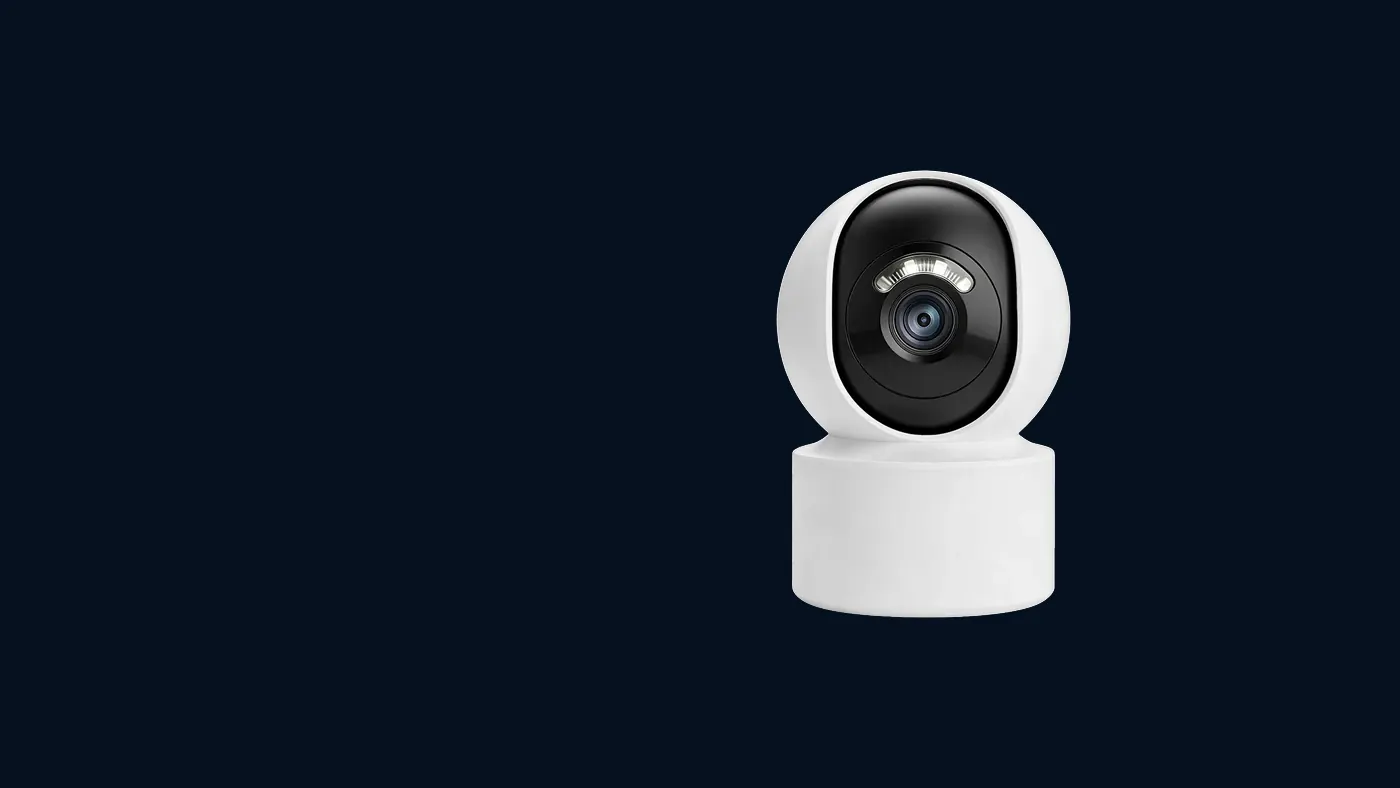
Black and white night vision is normal after dark: the camera switches on its infrared lights, removes a small colour filter from in front of the sensor, and records in grey because infrared has no colour. It is a fault only when the image stays grey in full daylight, or turns pink and washed out. In most cases the cause is one of four things, and you should check them in this order: the day/night setting in the app, something covering or confusing the light sensor, a stuck IR-cut filter, and only then a hardware failure.
Why cameras switch to black and white at night
Most security cameras, including most Yoosee models, carry two pieces of hardware that work together after dark.
- A light sensor. A tiny sensor on the front of the camera, often a small dark window near the lens or next to the ring of infrared LEDs, measures how bright the surroundings are. When it reads "dark", it tells the camera to change modes.
- An IR-cut filter. This is a small mechanical shutter that sits between the lens and the image sensor. In daylight the filter is in place and blocks infrared light, which keeps colours natural. At night the camera moves the filter out of the way so the sensor can see the infrared light from its own LEDs.
When the filter moves, you can often hear a faint click from the camera, though on some models it is too quiet to notice. If you can hear it, that click is one of the most useful clues in this article.
What full color night vision does differently
A color night vision camera takes a different approach. Instead of relying only on infrared, it uses a more sensitive sensor, a white spotlight, or both, so it can keep showing colour in low light. On cameras with full color night vision, you may see the spotlight switch on when motion is detected, or the image may stay in colour under a street lamp where an ordinary camera would already have gone grey.
Whether your camera has this feature, and what the setting is called, varies by model. If you bought an infrared-only camera, grey footage at night is expected and no setting will change it. Check the product label or manual to see which kind you have.
First, identify what you are actually seeing
Before changing anything, look at the live view in daylight and match it to one of these patterns. Each one points to a different cause.
| What you see in daylight | Most likely cause |
|---|---|
| Sharp grey image, no colour, sometimes a faint red glow from the LEDs | Camera is in night mode: setting or light sensor |
| Grey image, then colour for a moment, then grey again | Light sensor confused by shade, reflection or a nearby light |
| Strong pink, purple or washed-out colours | IR-cut filter stuck in the night position |
| Colour by day, but stays grey at dusk too long, or never returns to colour after night | Filter or sensor sticking intermittently |
| Black screen, or image frozen in one state after a reboot | Possible hardware or firmware problem |
A pink or purple tint in daylight is the classic sign of a stuck filter. Without the filter in place, the sensor sees both visible and infrared sunlight, and the colours shift towards pink. Plants and grass often look strangely white or pale in this state.
Step 1 — Check the day/night setting in the app
The simplest cause is a setting that was changed, deliberately or by accident.
- Open the Yoosee app and go into the live view of the affected camera.
- Open the camera settings. Depending on the app version, look for an image, video, night vision or display section. Menu names may differ slightly by app version.
- Find the day/night or night vision option. Common choices are automatic, always colour, always black and white, or infrared on and off. Some full colour models also offer a mode that switches between infrared and the white light.
- Set it to automatic if it is not already. A camera locked to night or infrared mode will stay grey all day regardless of the light.
- Wait a few seconds and watch the live view. If you hear a click and the image turns to colour, the problem is solved.
Not every model exposes this setting. If you cannot find it, that is not a fault in itself; move on to the next step.
Step 2 — Check the light sensor
If the setting is already automatic, the camera probably believes it is dark. That belief comes from the light sensor, so check what the sensor can see.
Something is covering the sensor
Look closely at the front of the camera. Common culprits:
- Leftover protective film from the box, especially on new cameras.
- Dirt, dust, insect nests or bird mess over the small sensor window.
- A sticker, tape or a hood that was added later and now sits over the sensor.
Clean the front gently with a soft, barely damp microfibre cloth. Do not use glass spray or alcohol on plastic covers. Then watch the live view again for a minute or two.
A quick test with your hand and a torch
You can test the sensor directly while watching the live view on your phone:
- Cover the sensor area with your hand in daylight. After a short delay the camera should click and switch to grey. Many cameras wait a little before switching so they do not flicker, so give it time.
- Take your hand away. It should click again and return to colour.
- If it is already stuck in grey, shine a phone torch at the sensor. If it switches to colour while the torch is on, the sensor and filter are working; the camera simply thinks the scene is too dark.
If the camera responds to your hand and torch, the hardware is fine. The issue is the location, which the next section covers.
The location is fooling the sensor
The sensor measures light where the camera is, not where it is pointed. That causes several real-world problems:
- The camera sits under a deep eave, porch roof or in a dark corridor, while the area it watches is in bright sun. The sensor sees shade and keeps night mode on.
- The camera faces a bright window or sky, then the sensor gets glare and the camera keeps hunting between modes.
- A nearby light switches on at dusk, such as a porch light or sign, and pushes the reading back and forth.
- The camera looks out through a window from indoors. Glass and tinted film can reduce the light reaching the sensor, and the camera's own infrared reflects off the glass at night.
If any of these apply, moving the camera a short distance often solves it. Our guide on where to place security cameras around the house covers positions that keep both the sensor and the view in sensible light. If your night footage is foggy or white rather than simply grey, that is a separate problem, explained in why a security camera is blurry at night.
Step 3 — Check for a stuck IR-cut filter
If the setting is automatic, the sensor is clean, and the image is grey or pink in daylight, the filter itself is the next suspect. Over time, dust, heat, damp air or a sudden knock can make the small shutter stick in one position.
Listen for the click
- Stand close to the camera in a quiet moment.
- Cover the sensor, then uncover it, as in the hand test above. Or switch the day/night setting between colour and black and white in the app.
- Listen. A clear click each time means the filter is moving. No click at all, or a weak buzz, suggests it is stuck.
If the filter clicks but the picture stays pink, the filter may be moving only part of the way, or it may have come loose inside. That is a hardware fault.
Ways to free a sticky filter without opening the camera
These are low-risk things to try. Do not open the housing, which can break the weather seal and may affect any warranty.
- Toggle the mode several times. Switching between forced colour and forced black and white a number of times can free a filter that is only slightly sticky.
- Restart the camera. Unplug it, wait a short while, then plug it back in. On most models the filter moves during start-up, and you may hear it click. For cameras on a mains supply mounted high up, switch off at the socket or breaker rather than pulling cables on a ladder.
- Let a cold or damp camera warm up and dry out. Filters sometimes stick on cold, humid mornings and free themselves later in the day.
If the camera works properly after this, note the date. A filter that sticks once often sticks again, so check the camera over the following week.
Try a reset only after the other checks
A factory reset rarely fixes a mechanical filter, but it can clear an odd image setting that you cannot find in the menus. It also wipes the WiFi profile and device password, so you will need to add the camera to the app again. Read how to reset a Yoosee camera first so you know what is erased, then try it only if the steps above did not help.
Step 4 — Signs it is a hardware fault
At this point you have ruled out settings, the sensor and location, and a simply sticky filter. These signs suggest a component has failed:
- No click at all, in any mode, even after restarts.
- The image stays pink in daylight even after toggling the mode, restarting and letting the camera dry out, which points to a filter stuck in the night position.
- The image is colour but the camera never switches to night mode, and the night picture is black or very dark. The filter may be stuck in the day position, or the infrared LEDs may have stopped working.
- The infrared LEDs do not glow at night when you look at the camera from a few steps away. Many infrared LEDs show a faint red glow; some models use a type you cannot see at all, so check your manual before deciding they are dead.
A stuck filter is a known mechanical failure in security cameras and is not usually something a home user can repair safely. Opening the housing risks moisture getting in and damaging the board.
When to get help
Contact the seller or installer if any of these apply:
- The camera is fairly new and the filter or sensor has failed. Ask about the warranty terms where you bought it; they vary by seller and region.
- The camera is mounted high on a wall or roof. Do not work on a ladder alone, and if the camera is wired into mains power, have a qualified electrician switch off and disconnect it.
- Water or condensation is visible inside the dome.
When you contact them, give the exact symptom (grey, pink, or flickering), whether you hear a click, what the day/night setting shows, and the model name from the label. That saves back and forth.
Install or resell cameras?
Several day/night faults can be avoided at install time:
- Peel all protective film from the lens and sensor before you leave, and check the live view for colour before you pack up.
- Do the hand test on site. Cover the sensor, listen for the click, uncover it, confirm colour returns. It takes seconds.
- Avoid deep shade for the camera body when the watched area is bright, and avoid pointing the sensor into a porch light.
- Show the customer the day/night setting in the app and explain that grey at night is normal, while grey or pink in daylight means they should call you.
If you install or sell cameras and want details of the Yoosee dealer program, see business.yoosee.com.
Frequently asked questions
Is black and white at night a sign my camera is faulty?
No. On infrared cameras, grey footage after dark is how night vision works, because infrared light carries no colour. It only becomes a fault if the image stays grey or turns pink in daylight, or if the camera never switches back to colour in the morning.
Why is my camera pink or purple during the day?
A pink or purple tint in daylight usually means the IR-cut filter has not moved back into place. The sensor is seeing infrared sunlight along with visible light, which shifts the colours. Try toggling the day/night mode and restarting the camera; if the tint stays, the filter is likely stuck and needs a repair or replacement.
Can I force my camera to stay in colour all night?
On many models you can set the day/night mode to colour, but an infrared-only camera will show a very dark or black image at night if there is no other light. Colour at night needs either enough ambient light, such as a porch lamp, or a camera with full color night vision. Check the settings and manual for your model.
What is the difference between colour night vision and infrared night vision?
Infrared night vision lights the scene with invisible infrared LEDs and records in black and white. Colour night vision uses a more sensitive sensor, a white spotlight, or both, so it can keep colour in low light, at the cost of visible light that people will notice. Some cameras offer both and let you choose a mode in the app.