
Fake Outdoor Cameras: Do Dummy Cameras Deter Anyone?
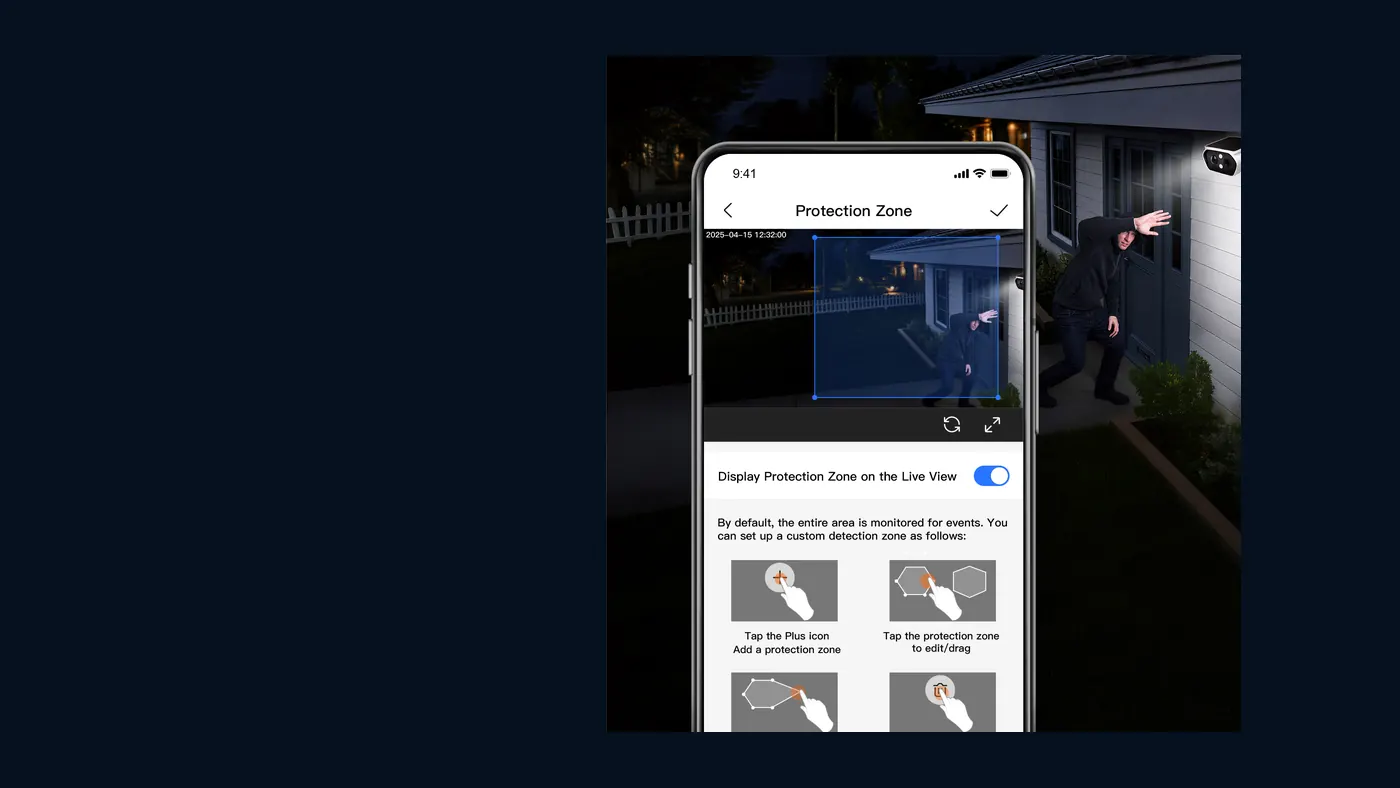
Fake outdoor cameras can put off a casual opportunist who glances at your house and decides not to bother, but that is the full extent of what they do. They record nothing, send no alert, and give you no evidence if something does happen. Anyone who looks closely, or who has done this before, can often tell a dummy from a real camera quickly. If you want deterrence plus proof, a low-cost real camera usually does far more for a similar effort.
This article explains what a dummy camera can and cannot do, the details that give fakes away, and how to decide between a dummy and a basic working camera.
What a dummy camera actually does
A fake camera works on one idea: a person who believes they are being filmed is more likely to move on. That idea is reasonable. The problem is that the dummy only works as long as the belief holds, and it offers nothing once someone stops believing it.
Here is what it can and cannot do:
- It can make a quick, unplanned decision go your way — someone checking unlocked gates or parcels at the door may pick an easier house.
- It can signal that the owner pays attention to security, which some people read as "not worth the risk".
- It cannot record a face, a plate number, or the time of an incident.
- It cannot warn you while something is happening. There is no phone alert, no siren, no light.
- It cannot help after the fact. If a parcel goes missing, there is nothing to play back and nothing to show anyone.
The last point matters more than people expect. Most of the value of a real camera comes after an event: knowing what happened, when, and who was involved. A dummy gives you none of that.
The giveaways that expose a fake
People who make a habit of looking at houses learn the signs quickly. Before you buy a dummy, or if you already have one up, check it against this list.
1. No cable, or a cable that goes nowhere
Real outdoor cameras need power. That means a cable into the wall, a cable along the wall to a socket, a solar panel, or a battery housing. A camera stuck to the wall with nothing attached and no obvious battery looks wrong. A loose cable hanging into thin air looks worse.
2. A blinking red light
Many dummies flash a red LED to look "active". Real cameras rarely blink a bright red light all night, and on many models the status light can be switched off. A steady, obvious red blink is one of the most common giveaways.
3. No infrared glow at night
Many real cameras with night vision have infrared LEDs around the lens. Depending on the type of LED, these may show a faint dull red glow in the dark when you look straight at them, although some are invisible to the eye. A dummy has no infrared at all, so at night it typically shows nothing but that single flashing light.
4. Cheap plastic and a hollow lens
Up close, dummies often have a shiny plastic body, a lens that is obviously just a dark disc, visible seams, and no brand or model label. Real outdoor cameras usually have a sealed housing, a label with the model details, and a lens with visible glass elements inside.
5. The wrong angle or the wrong place
A camera pointing at a blank wall, the sky, or a hedge does not look like it was installed to watch anything. Real cameras are aimed at doors, gates, driveways and paths. If your dummy is somewhere no installer would put a real camera, it is less convincing.
6. It never moves and never reacts
Some real cameras pan and tilt, turn on a light, or sound a warning when someone walks up. A dummy does nothing, ever. A person who walks right up to the door and gets no reaction at all may start to wonder.
7. A "solar" panel that is clearly decorative
A dummy solar camera often comes with a small panel that only charges the blinking LED. These panels are usually tiny, flimsy, and mounted at odd angles. A real solar camera has a panel sized to keep the camera running, angled toward open sky, with a proper cable into the camera body.
Making a dummy less obvious, if you use one anyway
If you decide a dummy is right for a particular spot — for example a second "camera" next to a real one — you can reduce the obvious signs:
- Turn off or cover the blinking LED. Many dummies have a switch or battery you can remove. A dark camera looks more real than a flashing one.
- Run a cable. Route a short length of cable from the camera into the wall or along the eaves so it looks connected.
- Mount it where a real camera would go. High enough to be out of reach, aimed at a door, gate or path.
- Pair it with a real camera. One working camera plus one dummy is far more useful than two dummies, because the real one does the recording.
- Keep it clean. A faded, dirty, cracked dummy looks abandoned, and an abandoned camera suggests nobody is watching.
For help choosing those spots, see this guide to where to place security cameras around a house. The same rules about entry points and approach paths apply to fakes and real cameras alike.
Fake security camera solar models versus real solar cameras
Searches for a fake security camera solar model usually come from people who want something easy to mount with no wiring. That is a fair goal, but it is worth knowing that real solar cameras solve the same problem.
| Solar dummy | Real solar camera | |
|---|---|---|
| Wiring needed | None | None on most models (panel plus battery) |
| Records video | No | Yes, usually to a memory card, with cloud as an option on some models |
| Phone alerts | No | Yes, when motion detection is on |
| Night vision | No | Yes on most models |
| Siren or light | No | On some models |
| Needs internet | No | WiFi or a 4G SIM, depending on the model |
The main extra a real solar camera needs is a connection. At a house with WiFi that reaches the spot, that is simple. Where WiFi does not reach — a gate, a farm, a building site — a 4G model with a SIM card is the usual answer. To see what that adds up to over a year, read how much a 4G security camera costs to run, which breaks the total into the camera, the data plan, the card and the mounting.
Why a low-cost real camera usually makes more sense
People choose dummies for three reasons: cost, no wiring, and no monthly fees. Real cameras can now meet all three in many cases.
Cost. A basic real camera costs more than a dummy, but the gap is often smaller than people assume. Compare prices for the specific models available to you rather than relying on general impressions.
No wiring. Battery and solar models mount with a few screws and no cable run, much like a dummy.
No monthly fees. Many cameras record to a memory card inside the camera, so a cloud plan is optional rather than required. The details vary by model and seller, so check before you buy; this guide to an outdoor camera without a monthly fee explains which running costs you can avoid and which ones stay.
And a real camera adds things a dummy never can:
- Recordings you can play back when something happens.
- Motion alerts on your phone, so you know while it is happening.
- Two-way audio on many models, so you can speak to a delivery driver or tell someone to leave.
- An active deterrent on some models — a light or siren that triggers on motion. If your camera has one, this guide to setting up a camera with a siren shows how to link it to detection and keep it from going off all day.
A light that switches on as someone approaches, followed by a voice through the speaker, sends a much clearer message than a plastic box with a blinking LED.
A simple way to decide
Work through these questions in order:
- Do you need evidence if something happens? If yes, you need a real camera. A dummy cannot help.
- Do you need to know in real time? If yes, you need a real camera with alerts.
- Is there power, WiFi, or 4G coverage at the spot? If any of these, a real camera is practical. If none, a dummy may be the only option for now — or consider moving the spot.
- Is this a secondary angle next to a real camera? A dummy can make sense here as extra visual deterrence.
- Are you renting and unable to drill? Many battery cameras mount with minimal fixings; check with your landlord and look for clamp or adhesive mounts suitable for your model.
If you answered yes to either of the first two, skip the dummy.
When to get help
Ask a professional or your seller when:
- The spot needs mains power. If you want a wired camera and there is no socket nearby, switch off power at the board and use a qualified electrician to add an outlet. Do not run mains cables yourself unless you are qualified.
- The camera has to go high up. Work on ladders and roofs carries real risk. If you are not comfortable, have someone experienced fit it, and never work at height alone.
- You are not sure WiFi will reach. Test signal strength at the exact spot with your phone first. If it is weak, ask your seller whether a 4G model or a WiFi extender suits your setup.
- You plan to film beyond your own property. Cameras that cover a street, a neighbour's garden or a shared area may be subject to local rules. Check local rules before you mount and aim the camera.
Frequently asked questions
Are fake outdoor cameras illegal?
In most places, putting a dummy camera on your own property is not a problem in itself, but rules differ by country and by situation. Issues usually arise when a camera — real or fake — appears to watch a neighbour's private space. Check local rules if you are unsure.
Can burglars tell if a camera is fake?
Often, yes, and they rarely need to get close. Someone experienced may simply walk up to the door and see whether a light comes on, a siren sounds or a voice speaks; a dummy fails that test every time.
Does a dummy camera lower my home insurance?
Do not assume it does. Insurers that offer a discount for security equipment usually mean working systems, and a dummy may not count. Ask your insurer directly what they accept.
How long does a dummy solar camera battery last?
It depends on the product, the panel and how much sun the spot gets. The battery in most dummies only runs a small LED, so it can last a long time, but cheap rechargeable cells do wear out. Check the product description and replace the cell if the light stops working.
Is a fake camera better than no camera at all?
For casual deterrence, a convincing dummy is better than nothing. But it gives you no recording and no alert, so it does nothing if someone ignores it. If you can manage the cost, one real camera at your main entrance is usually a better use of the money than several dummies.
Can I mix fake and real cameras?
Yes. Put the real camera where it matters most — usually the front door or gate — and use a dummy for a secondary angle. Make sure the dummy looks just as believable, or it may draw attention to the fact that not everything is real.