
How to Cover a Farm With Cameras When There Is No WiFi
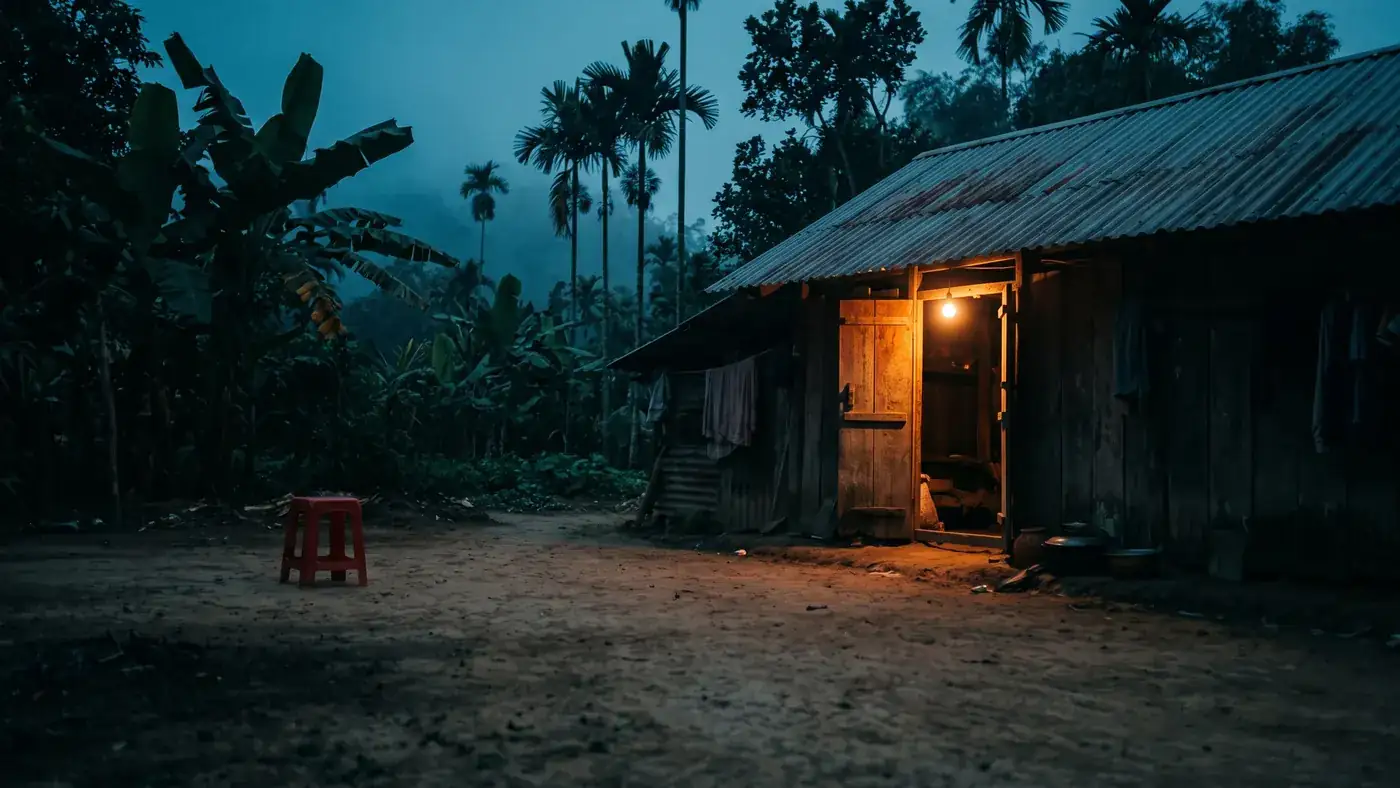
The useful question on a farm is not which camera to buy but which handful of places are worth watching first. Land is large, cable runs are impossible, and a camera aimed at open ground records grass moving for months and then misses the one night that mattered. Coverage on a farm works when it sits on the small number of chokepoints everyone has to pass through — the gate, the yard, the equipment store, the fuel and water points, the livestock housing.
Once those are chosen, the technical answer follows almost automatically. None of them has broadband and most have no socket either, so each one needs a camera that carries its own connection over 4G and its own power from a battery and solar panel. That pairing, and its limits, is covered in running a camera with no WiFi and no mains power.
What follows is the ordering — where to start, what each position is actually for, and what makes farm installs different from a house.
Start with the chokepoints, not the acreage
Trying to watch a whole holding is how farm camera projects die. Watch the places where traffic is forced to converge instead.
The main gate and the access track
This is the first camera on almost every farm, and if you only ever fit one, fit this one. Everything that arrives and everything that leaves passes through it. A gate camera answers the question that matters after an incident — who came, when, and in what — and that is worth more than a wide view of the yard where the same vehicle appears as a distant shape.
Frame it tight on the opening rather than on the landscape. A camera that covers the whole approach at a comfortable width will give you a person-shaped blur; one framed on the gap in the hedge gives you a face and a vehicle.
The equipment and tool store
Machinery, hand tools, quad bikes and batteries are portable, valuable and quick to move. The camera belongs inside the doorway looking out at the people, or on the outside covering the door and the ground in front of it — not looking down a long shed at the far wall.
If the building has no power, this is a natural spot for solar, since the roof is usually the best-lit surface on the farm.
Fuel tanks, water points and pumps
Fuel is stolen quietly and repeatedly, often in small amounts that nobody notices until a meter reading looks wrong. Pumps and troughs matter for a different reason: you also want to see them for operational purposes, not only for security. A camera on a water point tells you whether the trough is filling and whether the stock are drinking, which turns a security install into something you look at every day.
Things you check daily are things you notice when they break. That matters more than it sounds — a camera nobody opens is a camera nobody notices has been offline for a fortnight.
Livestock housing
Calving and lambing sheds, farrowing pens and any building where animals need checking at night. Here the value is mostly the trips you do not make. A camera that lets you look before walking out at two in the morning earns its place quickly.
Two practical notes. Indoor livestock buildings are dusty and humid, which means glass gets dirty fast and needs a cleaning routine. And two-way audio, where the model has it, is genuinely useful here — being able to hear a shed is sometimes more informative than seeing it.
The yard where vehicles park
Last of the five, and the one people are most tempted to do first because it is the easiest to reach. It is a supporting view: it tells you what happened after someone was already past the gate. Fit it once the entrances are covered.
Why farms end up on 4G and solar
The reasoning is short. Farm buildings are spread out, cable trenching across a yard is expensive and gets cut, and WiFi does not carry across fields or through steel-clad sheds. Even where a farmhouse has decent broadband, the signal rarely reaches the buildings that need watching.
So each camera brings its own link, over a mobile SIM, and its own power. The SIM side has its own pitfalls — data-only cards, physical sizes, APNs and PIN locks — set out in choosing a SIM for a 4G camera.
One farm-specific point about signal: test at every intended mounting point separately, and test at height. Coverage can differ sharply between the yard and a field gate on the far boundary, and a steel roof or a bank of trees changes things over a short distance. Walk the farm with a phone on the network you plan to use, run a data speed test at each spot, and write the results down before ordering anything. A dead spot found on paper costs nothing; found after mounting, it costs a second visit with a ladder.
Where a building does have power but no internet, the install is simpler and the solar half is unnecessary — that case is covered in cameras that work without WiFi.
Getting a picture that is actually useful at farm distances
The most common disappointment on a farm is a camera that recorded the incident perfectly and still cannot tell you anything, because everything in frame is too small.
Decide per camera whether you want identification or overview. You cannot have both from one position. Identification means a tight frame at a pinch point — a gateway, a doorway, a track — where a person or a vehicle fills a useful part of the image. Overview means a wide view that tells you something happened and roughly where, and nothing about who.
Put the identification cameras where movement is forced to slow down and narrow. Gates, doorways, the bend in the track. Fast movement across a wide frame is the hardest possible case.
Mount high enough to be out of reach but low enough to see faces. Too high and you record the tops of heads and hats. The trade-off is worked through in how high to mount an outdoor camera.
Test the night view yourself before you rely on it. Farms are genuinely dark, with none of the street lighting that props up a suburban camera at night, so the camera's own infrared is doing all the work and its useful range is shorter than the daytime view suggests. Walk the approach after dark and look at the result. Common causes of a poor night picture — and what to do about them — are in why the night image is blurry.
Mounting realities that are specific to farms
- There is often no suitable wall. Poles, posts and container corners are common mounting points. A pole flexes and vibrates in wind, and a shaking camera both blurs the image and triggers constantly, so brace it properly.
- Steel sheds vibrate and shed dust. Expect a cleaning routine on both lens and panel.
- Animals interfere with things at animal height. Cattle in particular will rub against anything reachable. Mount above the reach of stock, and route every cable where it cannot be chewed, pulled or caught by machinery.
- Machinery clearance matters. A camera on a gatepost is exactly where a trailer swings.
- Dust and slurry are harder on equipment than rain. Consider the position of the lens relative to the prevailing muck as well as the prevailing weather.
- Exposed positions need thought about weather and isolation. Discuss earthing, surge protection and appropriate mounting hardware with your installer or supplier for the position you have in mind.
- The kit is unattended and visible. Height, sensible fixings and putting the unit where it is awkward to reach are as much a part of the design as the electronics.
Keeping false alerts under control
Farms generate more false triggers than almost any other site: long grass, crops moving, trees, stock in frame, birds, machinery, headlights on a nearby road, and heat shimmer off metal roofs and hard standing. On a solar-powered camera that is not just an annoyance — each false trigger is a full wake cycle that costs battery, so an over-sensitive camera on a windy boundary can flatten itself.
The response is the same in each case:
- Draw the detection zone tightly around the gate, the door or the tank, and mask out grass, trees and any public road.
- Reduce sensitivity, then walk-test it. Sensitivity high enough to catch a swaying crop is far higher than you need for a person.
- Shorten clips so recording stops when motion stops.
- Use schedules where a spot only matters at certain hours — a yard that only needs cover once everyone has gone home, for example.
- Re-check seasonally. A frame that was clear in spring can be full of crop by midsummer.
Which of these controls exists, and what it is called, differs by model and firmware version — check the manual for the unit you actually have and confirm with the seller rather than assuming.
A sensible order to build it
Do not buy for the whole farm at once. Fit one camera, live with it through a full month including bad weather, and learn what your site does to it.
Phase one: the main gate. One camera, framed tight. Confirm signal, confirm night image, confirm battery recovers after grey days. This first unit is your survey for everything else.
Phase two: the equipment store and the fuel tank. The two highest-value targets after access.
Phase three: livestock housing and water points. The cameras you will actually open every day, which is what keeps the whole system maintained.
Phase four: yard and secondary views, if you still want them once the first three are working.
Before ordering, check three things with the seller for the exact model you are considering: whether it takes the SIM size and network you tested, whether local recording is supported so events survive a signal outage, and what mounting accessories exist for poles rather than walls. A similar staged approach for temporary sites is set out in running a camera on a site with no power.
Frequently asked questions
How many cameras does a farm actually need?
Fewer than most people expect, if they are in the right places. Start with the main gate, then the equipment store and fuel tank, then livestock housing and water points. Those chokepoints capture nearly everything that matters because traffic has to pass through them. Cameras pointed at open ground are the ones that end up unwatched, because they record movement all day and identify nobody.
Can I run farm cameras with no internet connection at all?
Yes — a 4G camera carries its own mobile connection and does not need broadband anywhere on the holding. Each camera needs its own data SIM, and the deciding factor is mobile coverage at the exact mounting point rather than at the farmhouse. Test each intended position with a phone on the network you plan to use before you commit.
Will solar cameras keep working through winter on a farm?
That depends on how hard the camera is working, not just on the weather. A camera with a tight detection zone at a gate can generally hold its balance through short days, while one triggering constantly on a windy hedge line or a nearby road may not. The two things that help most before winter are tightening the detection zone and keeping the panel clean, since low sun is blocked far more easily by dirt and shadow.
Are these cameras any use for watching livestock rather than intruders?
Often that becomes the main reason people keep them. A camera on a calving or lambing shed saves night trips, and one on a trough or pump shows whether water is getting through. Detail depends on the model — whether it has audio, how well it sees in a dark building, and whether it can be moved — so confirm what your specific unit does with the manual and the seller before planning around a feature.
What is the biggest mistake people make with farm cameras?
Mounting too wide. A camera set to cover as much land as possible produces footage where the person and the vehicle are unidentifiable smudges, which is useless exactly when you need it. Frame tightly on the point that traffic must pass through, and accept that you are not watching the whole field.
Do I need a separate SIM for every camera?
Yes. A SIM registers on the network from one device at a time, so cameras cannot share one. Each unit needs its own card and its own data allowance. If you are fitting several, ask your carrier whether they offer multi-device or pooled data plans, and set balance alerts — a lapsed prepaid account at a far gate can go unnoticed for a long time.
Supplying or installing cameras for farms
Agricultural dealers, machinery suppliers and installers working in rural areas deal with the same three questions on every job: coverage at the mounting point, power where there is no socket, and mounting hardware for poles rather than walls. Getting those settled at the survey is what separates a one-visit install from three. If you sell or install security cameras and want to discuss supply and dealer terms, see the Yoosee partner information.