
Yoosee Doorbell Setup: Pairing, Calls and Ring Alerts
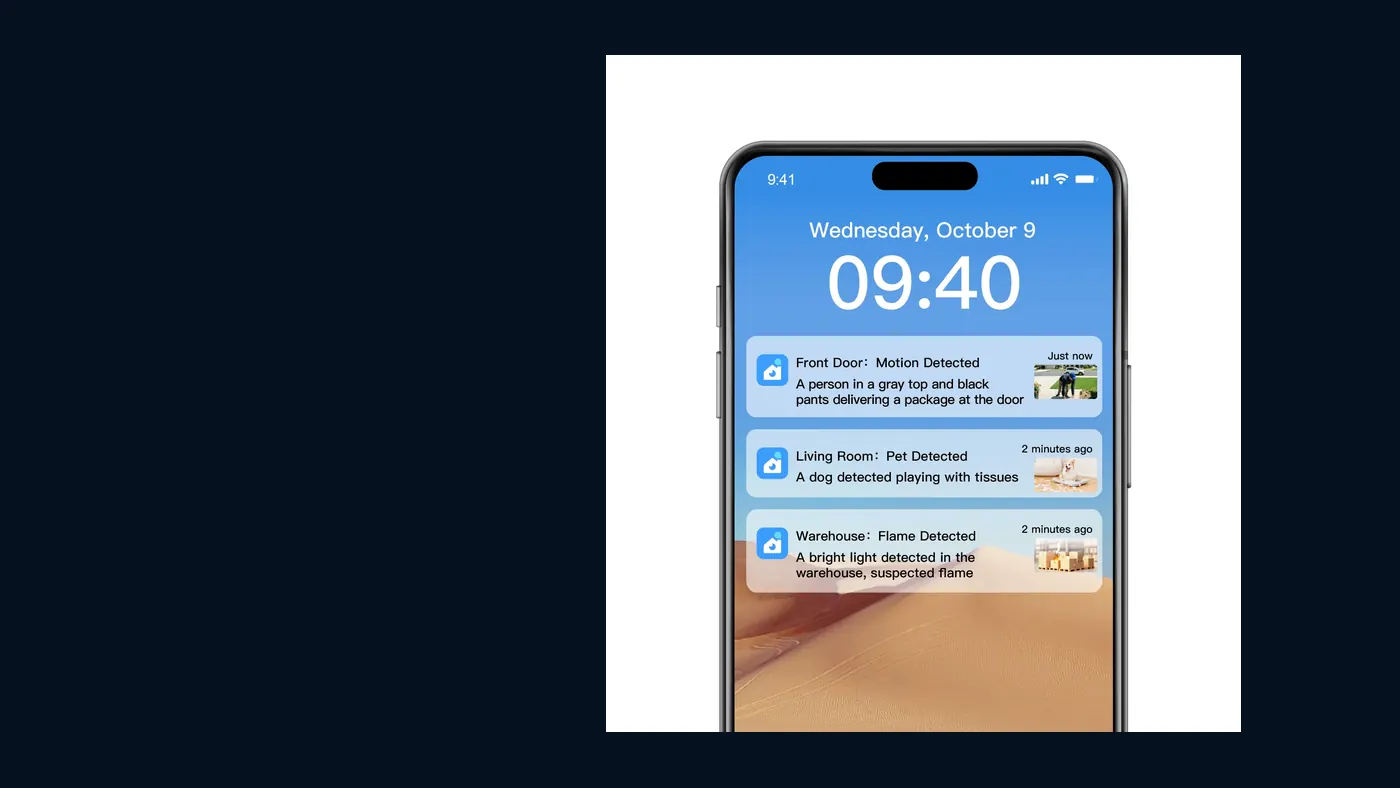
Setting up a Yoosee doorbell comes down to three jobs done in the right order: pair it with the app while it sits next to your router, mount it only after a test ring works, and then make sure your phone is allowed to show the ring as a call even when the screen is locked. When a doorbell "does not ring the phone", the cause is often not a hardware fault but a unit mounted before it was tested, or a phone that quietly blocks the app in the background.
This guide covers what is specific to a doorbell: the ring button, answering a visitor, the indoor chime and ring alerts. The general pairing process is shared with every Yoosee camera and is explained in full in how to add a camera to the Yoosee app; here we focus on what is different at the front door.
Before you start: know which doorbell you have
Doorbells in the Yoosee range are not all built the same way, and the differences change the setup. Check the box, the label on the back of the unit, or the manual for your model to answer three questions:
- How is it powered? Some models run on a built-in rechargeable battery, some are wired to an existing doorbell transformer, and some accept either. A battery model needs a full charge before setup; a wired model needs the power switched off at the breaker before you touch any wiring.
- Does it come with an indoor chime? Some kits include a plug-in chime that rings inside the house; on others the only "ring" is the notification on your phone. Some chimes have to be paired separately.
- How does it pair? Most models pair by QR code or by the doorbell's own temporary hotspot (AP mode). The manual will say which your model supports.
Also have ready: your own app account (whoever pairs the doorbell becomes its owner), your WiFi name and password written out, and a 2.4 GHz network. Like most WiFi cameras, these doorbells generally need a 2.4 GHz network and will not join a 5 GHz-only one; check your model's manual.
Step 1 — Charge or power it, then pair at the router
Do not climb a ladder yet. Pair the doorbell on a table beside the router first, so that any failure is about the setup and not about weak signal at the door.
- Charge it fully if it is a battery model. A low battery can cause the doorbell to drop out halfway through pairing, which looks like a WiFi problem but is not.
- Wake it up. Battery doorbells sleep to save power. Pressing the ring button or a power button usually wakes them; the manual for your model will say which.
- Wait for the pairing signal — typically a voice prompt, a beep, or a slowly blinking light. No signal usually means the unit was set up before and needs a reset. The reset guide explains how to find the button and what to listen for.
- Open the app, tap the add device option (often a plus sign), and choose the doorbell or the pairing method your model uses. Menu names may differ slightly by app version.
- Enter the 2.4 GHz WiFi details and follow the prompts — show the QR code to the doorbell lens, or join its hotspot from your phone's WiFi settings and return to the app.
- Name it something obvious, such as "Front door", and set a device password if the app asks. A clear name matters when the doorbell rings, because the name is what shows on your lock screen.
If pairing fails repeatedly, the causes are the same as for any camera: a 5 GHz network, a password typo, or the unit not being in pairing mode. Those are covered step by step in why a Yoosee camera won't connect to WiFi.
A battery doorbell may go to sleep during setup
One doorbell-specific trap: a battery unit can fall asleep while you are typing the WiFi password. If the app suddenly reports a timeout, press the ring button to wake the doorbell and start the add process again. Typing the password into a notes app first and pasting it in saves time here.
Step 2 — Test a ring before mounting
With the doorbell still beside the router, do one complete test. It is the step most worth not skipping, because a fault found now saves a second trip up the ladder.
- Lock your phone and put it face down.
- Press the ring button.
- Watch what happens on the phone. On most models you should see an incoming call style screen or a ring notification within a few seconds.
- Answer it and check you can see the picture and hear the room.
- Tap the talk button and speak. Someone standing at the doorbell should hear you.
If the ring arrives and both directions of audio work, the doorbell itself is fine. If any part fails, fix it now at the router — it is far easier than diagnosing it on a wall in the rain. If the picture works but your voice does not come out of the doorbell, go through the two-way audio checks; the most common cause is microphone permission that was refused when the app first asked.
Step 3 — Check the signal at the door, then mount
Front doors are often the worst WiFi spot in a house: the signal has to pass through walls and sometimes a metal door frame, and the doorbell sits outside the building.
- Stand at the door with your phone on the home WiFi and run a quick check — open the doorbell's live view while you are physically at the spot. If your phone's own WiFi signal is weak there, the doorbell's will be too.
- Hold the doorbell in position (or tape it temporarily) and open live view again. A picture that loads slowly or freezes means you need better coverage before mounting, such as moving the router or adding a WiFi extender on the 2.4 GHz band.
- Choose the height and angle so faces are visible, not just the tops of heads. A doorbell mounted too high tends to show only the tops of heads; the same reasoning as for outdoor cameras applies, see how high to mount an outdoor camera.
- Mount it. For a wired model, switch off the power at the breaker before connecting any wires, and if you are not confident with mains or transformer wiring, use a qualified electrician. For ladder work, have someone hold the ladder.
Pairing the indoor chime
If your kit includes a plug-in chime, plug it into a socket somewhere central and follow the pairing step in your manual — on many kits you hold a button on the chime until it flashes, then press the doorbell's ring button. Test it by ringing from outside with the door closed. Some chimes let you change the melody or volume with a button on the chime itself. If the chime works but the phone does not ring, the problem is notifications, not the doorbell.
Step 4 — Make ring alerts reach your phone instantly
A doorbell is only useful if the ring reaches you while the visitor is still at the door. A motion alert that arrives late is annoying; a doorbell ring that arrives late is useless. Work through these settings once.
In the app
- Notifications for this device are switched on. The app usually has a per-device alert setting as well as a general one. Check both.
- Motion detection is set the way you want it. Many doorbells also send motion alerts, sometimes called a camera alarm. If the street is busy, you may prefer to reduce motion sensitivity or narrow the detection zone so that real rings are not buried among dozens of motion alerts. Options vary by model.
- The arming schedule covers the hours you care about, if your app uses one for motion alerts.
On the phone
- Allow notifications for the app, including on the lock screen, with sound.
- Remove battery restrictions. On Android, set the app's battery use to unrestricted or "don't optimise". On iPhone, keep Background App Refresh on for the app.
- Check Focus and Do Not Disturb modes. If you want rings to come through at night, add the app to the allowed list.
- Allow full-screen or call-style alerts on Android if the phone asks. Some Android versions need this permission before an app can show an incoming call screen over the lock screen.
If rings still arrive late or not at all after these checks, the full layer-by-layer method is in Yoosee app notifications not working. A useful quick test: look at the event list inside the app. If the ring is recorded there but you never got a push, the doorbell is working and the problem is entirely on your phone.
Answering a visitor: what to tap
When the doorbell rings, the screen you see depends on the app version and whether the phone was locked, but the controls are similar:
- Answer / accept opens the live view. On some versions, tapping the notification opens the app and the live view loads.
- Talk — a microphone icon. On some versions you hold it while speaking and release to listen; on others you tap once to open the line. If visitors only hear fragments, you may be releasing too early.
- Speaker / mute — controls whether you hear the doorstep. If it is muted, you will see the visitor but hear nothing.
- Snapshot or record — useful if you want to keep a picture of who came by.
- Hang up / back — closes the call. On battery models, ending the call promptly helps the battery last.
There is usually a short delay between speaking and being heard. Speak, pause, then listen, rather than talking over the visitor.
Letting the whole household answer
Normally only the account that paired the doorbell receives its rings. If others in the home should be able to answer, share the device to their own accounts rather than handing out your password — the steps are in how to share a Yoosee camera with family. After sharing, ask each person to do one test ring with their phone locked, because each shared account has its own notification settings and phone permissions to fix.
When to get help
Some problems are not settings, and it is worth stopping rather than repeating the same steps:
- The doorbell will not power on after a full charge, or a wired unit stays dark with the power confirmed on. For wiring, stop and call a qualified electrician.
- The ring button does nothing — no chime, no light, no event in the app — even when the doorbell is online. That points to the button or the unit itself.
- Water inside the housing or a fogged lens after rain.
- Pairing fails at the router after a reset, on a confirmed 2.4 GHz network, with a password you have checked character by character.
In these cases, contact the seller or installer with the model name from the label, what you tried, and what the doorbell does (lights, sounds) when you press the button. That information gets you a useful answer much faster.
Frequently asked questions
Why does my Yoosee doorbell ring the chime but not my phone?
On kits with a paired chime, the chime usually hears the doorbell directly, while a phone alert also depends on the internet, the app and your phone's permissions. So a ringing chime tells you the button works and the fault sits on the phone side: go through the Step 4 checklist above, starting with battery restrictions.
Can I answer the doorbell when I am not at home?
Yes, that is the main purpose of a video doorbell: the ring reaches your phone over the internet wherever you are. Your phone needs a data or WiFi connection, and the doorbell needs a stable connection at the door. A weak signal at the door shows up as a slow-loading call, not as a missing feature.
How long does the battery last on a battery doorbell?
It depends heavily on the model and on how it is used: every ring, every motion alert and every minute of live view uses power. A doorbell facing a busy street will need charging far more often than one facing a quiet garden. Check the manual for your model's estimate, and reduce motion sensitivity if it drains faster than you expect.
Will the doorbell work if my WiFi goes down?
Without WiFi the doorbell cannot send a ring to your phone, and on most models live view and remote talk stop as well. A paired plug-in chime may still ring on kits where the chime connects to the doorbell directly, but check your manual. If the router restarts, the doorbell normally reconnects on its own once the network is back.
Can I use the doorbell with my old mechanical chime?
Some wired models can be connected to an existing chime and transformer, while battery models usually rely on their own plug-in chime or the phone only. Whether your model supports an existing chime is in its manual. Any work on doorbell wiring should be done with the power off, and by an electrician if you are unsure.