
Where to Put the Solar Panel on a Security Camera Install
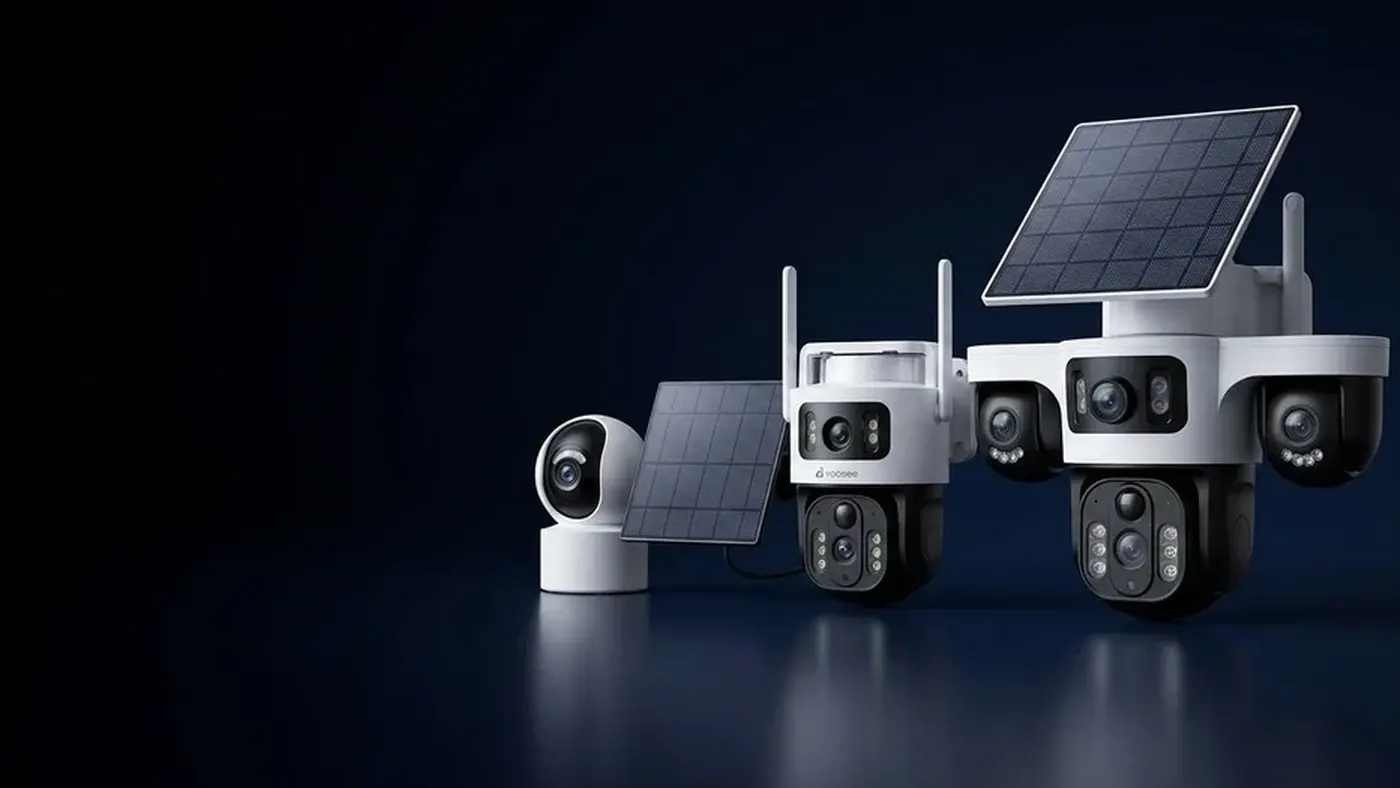
Most people choose the camera position first and put the panel wherever it happens to reach. That is backwards, and it is why so many solar cameras die in their first winter. The camera can usually see what you need from several spots. The panel has one job, and only a few places on any building will let it do that job all year. Decide the panel position first, then find a camera position that works with it.
Three things decide whether a panel position is any good: which way it faces, how it is tilted, and whether anything shades it at any point in the day or the year. Get those right and the camera looks after itself. Get them wrong and no setting in the app will save it.
Start with the panel, then place the camera
If your camera has the panel built into its body, the two decisions are locked together and you are looking for a compromise: a spot where the panel gets open sky and the lens still covers what you care about. When they conflict, favour the panel — a camera at a less ideal angle is still useful, while a flat camera is not.
If your model supports a separately mounted panel on a cable, use that freedom: camera where the view is best, panel where the sky is clearest, even on different walls. It is the biggest advantage of that design and it is often wasted.
Whether your unit has a fixed or separate panel, what cable length it comes with, and which panels are compatible are all model-specific — check the manual for the camera in your hands and confirm with the place you bought it before ordering brackets or extension cables.
Which way the panel should face
Aim the panel at where the sun is strongest in the middle of the day. North of the equator that means facing it south; south of the equator, north. Close to the equator the sun passes near overhead and compass direction matters less than tilt and the absence of shade, so prioritise open sky.
A few practical notes:
- You do not need to be exact. Being somewhat off the ideal direction costs less output than a single branch shadow will.
- East or west facing is workable but weaker, because the panel only catches good light for part of the day. If it is your only option, prefer whichever side is clearer of obstacles.
- Facing away from the equator is the one to avoid — north-facing in the northern hemisphere, south-facing in the southern. Such a panel sees very little direct sun in winter, exactly when you need it most.
- Use your phone's compass on the actual wall, not a mental picture of the property. People misjudge which way a building faces surprisingly often.
Tilt: steep enough that rain rinses it
A panel lying flat, facing straight up, seems like it should catch everything. In practice it is a poor choice for two reasons.
Low sun. In winter, and in the morning and evening year-round, the sun is low and light hits a flat panel at a glancing angle. A tilted panel presents its face to that light instead.
Dirt and water. A flat panel collects dust, pollen, leaf litter, droppings and standing water, and nothing removes them. A tilted panel lets rain run off and take the film with it — free cleaning, in most climates. Where snow falls, a steeper tilt sheds it instead of holding a light-blocking layer.
So: tilt the panel up from horizontal, facing the direction you chose above, steeply enough that water clearly runs off rather than pooling. The further you are from the equator, the more a steeper tilt helps, because the sun sits lower in your sky. Near the equator a shallower tilt works well, but keep enough angle for drainage.
Check the result by looking at the panel from where the midday sun would be. If you can see its whole face from there, it is aimed sensibly. If you are seeing it edge-on, it is not.
Find the shade before you drill
Shade is the most common cause of a solar camera that "does not charge properly", and it is more damaging than people expect. Because of how panel cells are wired, a shadow across part of the surface cuts the whole panel's output out of all proportion to the area covered. A single branch or an aerial arm is enough.
Check the spot at the middle of the day
Go to the proposed position around midday on a clear day and look at the sky from the panel's point of view — not from the ground. Anything interrupting open sky in the direction the panel will face is a problem: an eave, a gutter, a chimney, a neighbouring wall, a pole, a washing line, an aerial, a tree.
Check again in the late afternoon. Shadows move a long way in a few hours, and a spot clear at noon may sit behind a wall by mid-afternoon.
The winter shadow trap
This is the one that catches experienced installers. The sun is lower in winter, so shadows are longer and fall where they never reach in summer. A panel with open sky all summer can sit in the shadow of the same roof for most of a short winter day. Nothing has broken — the geometry changed.
So ask where the shadow will be when the sun is at its lowest, and give yourself margin. A position with plenty of clear sky above and to the sides in summer will probably survive winter; one that is only just clear will not.
Trees are not static obstacles
A branch that clears the panel this year may not clear it in a few years. If there is a tree near the panel's line of sight, either prune it now with the panel in mind or choose a different position. The same goes for hedges, climbing plants and bamboo.
If your camera is already installed and the battery never reaches full even after a bright day, work through why a solar camera is not charging before moving anything, since a cable or connector fault produces the same symptom as shade.
Cable runs, reach and theft
For separate-panel models, the cable decides how much of that freedom you can use.
Measure the run before you buy brackets, along the route the cable will actually take — around the corner, along the eave, down and back up — not the straight-line distance. Runs are almost always longer than they look.
Do not improvise an extension. Cable length and any compatible extension are model-specific, and the wrong cable can mean poor charging or damage. Ask the seller what is supported for your unit.
Leave a drip loop. Let the cable hang below the connector before it comes back up into the plug, so water running along it drips off at the bottom of the loop instead of into the connection. This one habit prevents a lot of corroded connectors.
Clip the cable down along its whole run. A loose cable chafes through its insulation in the wind, and a hanging loop invites animals — rodents and birds do chew outdoor cabling.
Keep the panel out of easy reach. A panel at head height on an accessible wall is easy to unclip and take, and mounting higher usually improves the view of the sky too. The camera has its own height considerations, covered in how high to mount an outdoor camera.
On sites with no power at all, plan the panel position before anything else, because there is no fallback if you get it wrong and nobody on site to notice a slow decline. See construction site cameras with no power for how that changes the survey.
Keeping it clean, and checking it stayed right
A panel is a maintenance item, not a fit-and-forget one, though the maintenance is light.
Clean it when it looks dull. Plain water and a soft cloth is enough; avoid abrasive pads and strong solvents, which can haze the surface permanently. Do it on an overcast day rather than onto hot glass.
Clean more often in the seasons that matter. In summer a dusty panel still delivers plenty. In a dark winter or a long grey season, the same film is the difference between keeping up and slipping behind. The same applies after pollen season or near a dirt road or building work.
Look up at it a couple of times a year. Brackets loosen, wind knocks panels out of alignment, plants grow, neighbours put up sheds. A panel that has drooped towards flat will quietly under-perform without ever failing outright.
Watch the battery trend rather than a single reading. Noting the level at the same time each day for a week tells you whether the position is working. What that trend means is covered in how long a solar camera battery lasts — and if you are wondering whether an overcast climate is workable at all, see whether solar cameras work in cloudy weather.
Frequently asked questions
Which direction should a security camera solar panel face?
Face it toward the strongest midday sun: south if you are north of the equator, north if you are south of it. Near the equator the compass direction matters much less, and open sky and a sensible tilt matter more. East and west positions work but harvest for less of the day, and a panel facing away from the equator is the one to avoid, because it sees very little direct sun in winter.
What angle should I set the solar panel to?
Tilt it up from horizontal, facing your chosen direction, steeply enough that rainwater clearly runs off instead of pooling. A flat panel collects dirt that never washes away and catches low winter sun poorly, while a tilted one cleans itself in the rain and presents its face to low sun. The further you are from the equator, the more a steeper tilt helps.
Can I mount the solar panel away from the camera?
On models that use a separate panel connected by a cable, yes, and it is usually the better approach — the camera goes where the view is and the panel goes where the sky is clear. Cameras with the panel built into the body do not offer this. Whether your unit supports a separate panel, and which panels and cables fit, varies by model, so check the manual and ask the seller first.
Does a little shade on the panel really matter?
More than you would expect. Panel cells are wired in series, so a shadow across part of the surface can reduce the whole panel's output far beyond the fraction of area covered. A single branch, an aerial arm, a gutter or the edge of a roof is enough to matter. Because shade is there every day while cloud passes, a shaded position is a bigger long-term problem than a cloudy climate.
How often should I clean the solar panel?
Whenever it looks dull, and more often in the darker months and after dust, pollen or building work nearby. Use plain water and something soft, not abrasive pads or strong solvents. A tilted panel does most of this for you when it rains, which is one of the practical reasons not to mount it flat.
My camera worked all summer and stopped charging in winter. Did something break?
Usually not. The sun is lower in winter, so shadows from roofs, walls and trees fall where they never reached in summer, and a panel with clear sky in July can sit shaded for most of a short winter day. Check the position at midday during the cold season and see whether it is actually in sun. If it is in full light and still not charging, look at the cable, the connector and the panel surface next.
Surveying solar sites for customers
If you install for others, the panel survey is the part worth slowing down for: stand at the proposed panel position, look at the sky it will actually see, and picture the winter shadow rather than today's. A position chosen for cable convenience is the most common reason a customer calls back in the first cold month. If you sell or install security cameras and want to discuss supply and dealer terms, see the Yoosee partner information.